In solitude and prayer we discover our inner self.
Greetings on this the Friday of the Twenty-fifth Week in Ordinary Time Readings: Ecclesiastes 3:1-11; Psalm 144:1b and 2abc, 3-4; Luke 9:18-22
Summary
Once when Jesus was praying in solitude, and the disciples were with him, he asked them, “Who do the crowds say that I am?” (Lk 9:18).
NABRE * [3:21] Was praying: Luke regularly presents Jesus at prayer at important points in his ministry: here at his baptism; at the choice of the Twelve (Lk 6:12); before Peter’s confession (Lk 9:18); at the transfiguration (Lk 9:28); when he teaches his disciples to pray (Lk 11:1); at the Last Supper (Lk 22:32); on the Mount of Olives (Lk 22:41); on the cross (Lk 23:46). (https://bible.usccb.org/bible/luke/3?21=#50003021)
The psalmist helps us today. Which of these resonates with you?
Mercy
Fortress
Stronghold
Delivered
Shield
Trusted One
Feeling noticed? Appreciated and seen?
Even if I am but a breath, you account me as eternal (because you, Lord, are eternal)!
Blessed be the LORD, my rock, my mercy and my fortress, my stronghold, my deliverer, My shield, in whom I trust.
LORD, what is man, that you notice him; the son of man, that you take thought of him? Man is like a breath; his days, like a passing shadow. (Psalm 144:1b and 2abc, 3-4)
Reflection
But who do you say that I am? (Lk 9:20a). Peter said in reply, “The Christ of God.” (Lk 9:20b)
Personal Reflection
In our solitude we discover:
What we think of others.
What we think of ourselves.
What we wonder how others think about us – but only in ways that remain healthy, truthful, and charitable.
Solitude brings clarity and freedom.
Prayer brings clarity and charity in the thinking.
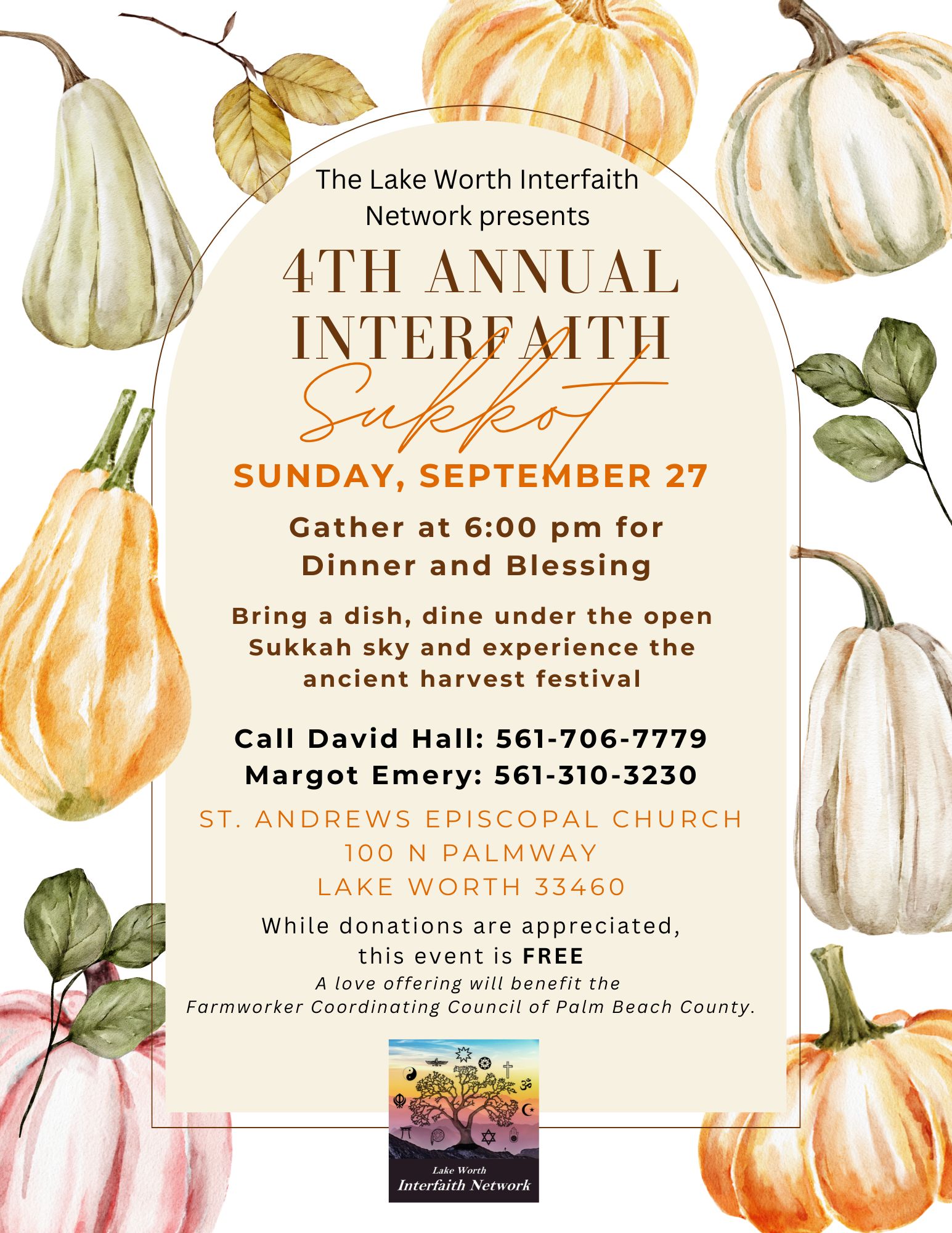
My update today is to be working on my presentation at the Interfaith gathering Sunday evening. I should be cleared to drive by then (one handed, but still safely). The 72 hour rule expires at Noon Sunday.
Pray I aid in the effort to bring greater harmony and understanding between the faiths present at the gathering. May we enjoy the divine benevolence of presence, community and acceptance. Now more than ever.
If you wish to comment, please do! I accept any and all comments to help!
My Notes as I prepare Interreligious connections to feasts and fasting (max 3-5 minutes). I will verbally trim for the event:
(1) Feast and fast both teach us that life is a gift. Feast teaches us to receive with gratitude; fast teaches us that we do not possess the gift as if it were ours alone.
(2) The booth Feast is both memory and invitation: (a) memory that God sustained a people in fragile dwellings, and; (b) our invitation to the Holy One to dwell among us still. First it is the offer – I, the Lord, wish to dwell with you, And second our invitational response: Stay with us Lord. Such, the necessity of the reliance of Divine Care.
(3) Fasting is a Call to Service. Traditionally, the merit of a particular fast of a particular individual is in direct proportion to the Charity Dispensed. To fast and yet neglect the poor perverts religion (The New Jerome Biblical Commentary, 21:54 x-ref Matt 25:31-46).
(4) Fasting is preparation for Mystical Knowledge (Daniel/Jesus). As a preparation for divine gifts. Gifts are gifts, freely given. Our disposition of fully receiving the gift is in our preparation. Open my eyes to see clearly (Ps 119:18a; Mt 4:2).
(5) Fasting is a Communal Repentance. When we fast we acknowledge the most foundation truth of all:
There is a God. It isn’t me.
(6) Fasting is Obedience. An act of self-control and interdependence. Is my body obedient to a simple command? Or has my mind lost control of my personhood? If I cannot command my appetite, how can I command myself to love?
(7) Fasts and Feasts are really the same thingat different points in time. Perhaps the most challenging truth. In the first instance we are grateful for the benevolent aid provided during difficult times. In the second instance we are repairing our part of the foundation of the festive divine relationship. My feast must have a fast – a realignment, a repair, a chiropractic adjustment such that our divine feasts may be all the more joyful. We joyfully fast that we might joyfully feast.
(8) Feasts and Fasting are shelter manifested in us! Divine shelter becoming human shelter. This is our common goal. Shelter one another!
Greetings on this the Tuesday of the Twenty-fifth Week in Ordinary Time Readings: Proverbs 21:1-6, 10-13; Psalm 119:1, 27, 30, 34, 35, 44; Luke 8:19-21
Summary
Regarding the Book of Proverbs: The instructions and the aphorisms of the book can free the mind to see new things. Christians will see in personified Wisdom aspects of Jesus Christ, who they believe is divine wisdom sent to give human beings true and full life. Yet there is a universal dimension to Proverbs, for in its attention to human experience it creates a link to all people of good will (see https://bible.usccb.org/bible/proverbs/0).
Our Proverbs in today’s readings are from the The First Proverbs of Solomon, placed side-by-side with the Jesus encounter
To do what is right and just is more acceptable to the LORD than sacrifice. He said to them in reply, “My mother and my brothers are those who hear the word of God and act on it.” (Pv 21:6; Lk 8:21).
Together they mean:
Doing right is better than performing ritual sacrifice.
Doing right is more than being related by family.
Lead me in the path of your commands, for in it I delight (Ps 119:35).
We experience being members of the family of Jesus by our actions. It brings joy to our souls and a sense of belonging that would be missing otherwise.
Reflection
The story of Jesus’ family-in-wait has three different titles in the synoptic gospels.
Luke: Jesus and His Family
Matthew: The True Family of Jesus
Mark: Jesus and His Family
In the gospel of John, the generally accepted correlation is a subsection of the The Vine and the Branches discourse but Jesus uses the title for us as “Friends”, Jn 15:9-17, of which I give you a smaller part.
As the Father loves me, so I also love you. Remain in my love. If you keep my commandments, you will remain in my love, just as I have kept my Father’s commandments and remain in his love. “I have told you this so that my joy may be in you and your joy may be complete. This is my commandment: love one another as I love you. No one has greater love than this, to lay down one’s life for one’s friends. You are my friends if you do what I command you (Jn 15:9-14).
Personal Reflection
The best, the more acceptable, is to be Family and Friend of Jesus.
Or did you forget when you fell in love? You became friend and family.
Or did you forget your marriage vows? You maintain friend and family.
My grandmother used to say, “You marry a stranger”, to which I would always add, thank God you first fell in love.
Fall in love with Jesus, and like a marriage, you become family and friend—and discover the deeper joy of belonging.
Rise, pick up your stretcher, and go home. Matthew’s calling is a parallel event.
Greetings on this the Feast of Saint Matthew, Apostle and evangelist Readings: Ephesians 4:1-7, 11-13; Psalm 19:2-3, 4-5; Matthew 9:9-13
Summary
And he gave some as apostles, others as prophets, others as evangelists, others as pastors and teachers, to equip the holy ones for the work of ministry, for building up the body of Christ, until we all attain to the unity of faith and knowledge of the Son of God, to mature manhood, to the extent of the full stature of Christ. He said to him, “Follow me.” And he got up and followed him. Go and learn the meaning of the words, ‘I desire mercy, not sacrifice.’ I did not come to call the righteous but sinners (Eph 4:11:13; Mt 9:9b,13).
Reflection
Each of us is called to follow Jesus in a capacity first known to the Lord and, at the appropriate time, we become aware of our individual calling. This calling starts with the foundational truth: I desire mercy, not sacrifice.
Go and learn isn’t a classroom activity. It means to act and contemplate, in parallel, the call within the call – bringing Sinners to Christ. Which, last I checked, is that everyone is in the category.
Mercy is both an act and a disposition. Calling is to follow the one with the calling mission, mercifully, and intentionally.
Personal Reflection
Matthew heard these words: Follow me.And he got up and followed him. Let’s treat today just the same way.
Greetings on this the Twenty-fifth Sunday in Ordinary Time Readings: Isaiah 55:6-9; Psalm 145:2-3, 8-9, 17-18; Philippians 1:20c-24, 27a; Matthew 20:1-16a
Summary
Seek the LORD while he may be found, call upon him while he is near. The Lord is near to all who call upon him. Only, conduct yourselves in a way worthy of the gospel of Christ. Why do you stand here idle all day? (Isa 55:6; PS 145:18a; Phil 1:27a; Mt 20:6b)
Reflection
Open our hearts, O Lord, to listen to the words of your Son (Acts 16:14b).
In our Gospel portion today, we are given the contrast between doing nothing (“standing idle”) – living emptiness – and engaging with the Lord and doing something marvelous! Enter the Lord’s vineyard—accepting the work he gives us.
The Lord is near and He has a beautiful purpose for your life. Don’t let anything stop you from calling upon the Lord. He’s right here. Conduct yourselves in a way worthy of the gospel of Christ, it’s a process that begins with the asking!
Greetings on this the Saturday of the Twenty-fourth Week in Ordinary Time Readings: 1 Corinthians 15:35-37, 42-49; Psalm 56:10c-12, 13-14; Luke 8:4-15
Summary
I will walk in the presence of God, in the light of the living (Ps 56:14).
Bear one another’s burdens, and so you will fulfill the law of Christ. You are the light of the world. Just as we have borne the image of the earthly one, we shall also bear the image of the heavenly one. (Gal 6:2; Mt 5:14a; 1 Cor 15:48).
Reflection
Said another way, walking in the presence of God is light-living: illuminated from within, and illuminated by the light others share. Living is community.
In the parable today, the examples are about how we individually and communally prepare the soil of our souls to receive the seed of the Word. But our soil is not entirely private. We share it with others. You share the soil with others. How we care for the soil determines how the seed is received.
Personal Reflection
Wouldn’t it be the most marvelous thing to be rich soil for others?
But as for the seed that fell on rich soil, they are the ones who, when they have heard the word, embrace it with a generous and good heart, and bear fruit through perseverance.
Greetings on this the Friday of the Twenty-fourth Week in Ordinary Time Readings: 1 Corinthians 15:12-20; Psalm 17:1bcd, 6-7, 8b, 15; Luke 8:1-3
Summary
Jesus journeyed from one town and village to another, preaching and proclaiming the good news of the Kingdom of God. Accompanying him were the Twelve and some women. Mary, called Magdalene, from whom seven demons had gone out, Joanna, the wife of Herod’s steward Chuza, Susanna, and many others who provided for them out of their resources (Lk 8:1, 2b-3).
Reflection
But now Christ has been raised from the dead, the firstfruits of those who have fallen asleep. Lord, when your glory appears, my joy will be full. (1 Cor 15:20; PS 17:15b).
If Jesus is the firstfruit of the Resurrection then these women are the first witnesses of the firstfruit. Before, during and after the resurrection.
On the first day of the week, Mary of Magdala came to the tomb early in the morning, while it was still dark, and saw the stone removed from the tomb (Jn 20:1).
Personal Reflection
I’m not being disrespectful to The Twelve but calling attention to the faithful women of that time and of our time. It is a common error to focus our attention to the powerful (even within the Church, even early on in the Church) and focus on the influential. But these women (disciples, benefactors, companions, and witnesses) are a major portion of the fullness of the treasure.
The visible institution is never the whole system. There are people who sustain it, absorb its pressures, and perceive things the center may not see. Recent Popes have done much to rebalance the feminine influence by listening to the feminine voice.
In a similar way, the blogger I reference below calls attention to the over-taxed citizen (meaning stressed for survival) and their common response and the need to adjust. This blogger is worthy of your time today. There is an important correlation and parallel crisis in the civil society and the Church.
When a population is overtaxed, the collapse of nuance is not a failure. It’s a signal. And the people who can still see the architecture become the ones who help the system find its way back to coherence.
Mary, called Magdalene, from whom seven demons had gone out, Joanna, the wife of Herod’s steward Chuza, Susanna, and many others who provided for them out of their resources... Pray for us!
Greetings on this the Thursday of the Twenty-fourth Week in Ordinary Time Readings: 1 Corinthians 15:1-11; Psalm 118:1b-2, 16ab-17, 28; Luke 7:36-50
Summary
The editors of the biblical translation we use use footnotes to clarify, define and extend the sacred script we read each day. Sometimes the notes are brief (a translation or a cross reference) and sometimes the editors give us a paragraph to contemplate. A miniature reflection. Today is such a day.
The Pardon of the Sinful Woman
[7:36–50] In this story of the pardoning of the sinful woman Luke presents two different reactions to the ministry of Jesus. A Pharisee, suspecting Jesus to be a prophet, invites Jesus to a festive banquet in his house, but the Pharisee’s self-righteousness leads to little forgiveness by God and consequently little love shown toward Jesus. The sinful woman, on the other hand, manifests a faith in God (Lk 7:50) that has led her to seek forgiveness for her sins, and because so much was forgiven, she now overwhelms Jesus with her display of love; cf. the similar contrast in attitudes in Lk 18:9–14. The whole episode is a powerful lesson on the relation between forgiveness and love. (https://bible.usccb.org/bible/luke/7?36)
Reflection
For I handed on to you as of first importance what I also received: that Christ died for our sins in accordance with the Scriptures; that he was buried; that he was raised on the third day in accordance with the Scriptures; that he appeared to Cephas, then to the Twelve (1 Cor 15:3-5)
Credal Beliefs
[15:3–7] The language by which Paul expresses the essence of the “gospel” (1 Cor 15:1) is not his own but is drawn from older credal formulas. This credo highlights Jesus’ death for our sins (confirmed by his burial) and Jesus’ resurrection (confirmed by his appearances) and presents both of them as fulfillment of prophecy. In accordance with the scriptures: conformity of Jesus’ passion with the scriptures is asserted in Mt 16:1; Lk 24:25–27, 32, 44–46. Application of some Old Testament texts (Ps 2:7; 16:8–11) to his resurrection is illustrated by Acts 2:27–31; 13:29–39; and Is 52:13–53:12 and Hos 6:2 may also have been envisaged. (https://bible.usccb.org/bible/1corinthians/15?1=#54015001)
Give thanks to the LORD, for he is good, for his mercy endures forever (Ps 118:1b).
Personal Reflection
The sinful woman overwhelmed Jesus with love.
Alabaster is a white stone that is translucent and is hollowed out to be used as a vessel to store expensive perfumes or oils. Sometimes you can see into the jar but not see the fluid in the jar. In other words, you might be able to see the level of fluid and a bit about its basic color but to know what the contents are … you have to pour it out. As she did. The alabaster jar is her heart and the perfumed oil is her love which she generously pours out, with tears of gratitude and visible anointing his feet. She anointed my feet with ointment.
She stood behind him at his feet weeping and began to bathe his feet with her tears. Then she wiped them with her hair, kissed them, and anointed them with the ointment.
What do you think people will say about your love for Jesus? Do they have a sense of your love by looking into your alabaster jar and see the fluid level? When you pour out the oil, where does it go? On whom do you pour it?
Amen, I say to you, whatever you did for one of these least brothers of mine, you did for me (Mt 25:40b).
Pour your loving oil upon all those around you, friend and foe. In pouring it upon them, you pour it upon Christ.
This is a text widget, which allows you to add text or HTML to your sidebar. You can use them to display text, links, images, HTML, or a combination of these. Edit them in the Widget section of the Customizer.